Off-Grid Power Solution: Solar + Battery Storage
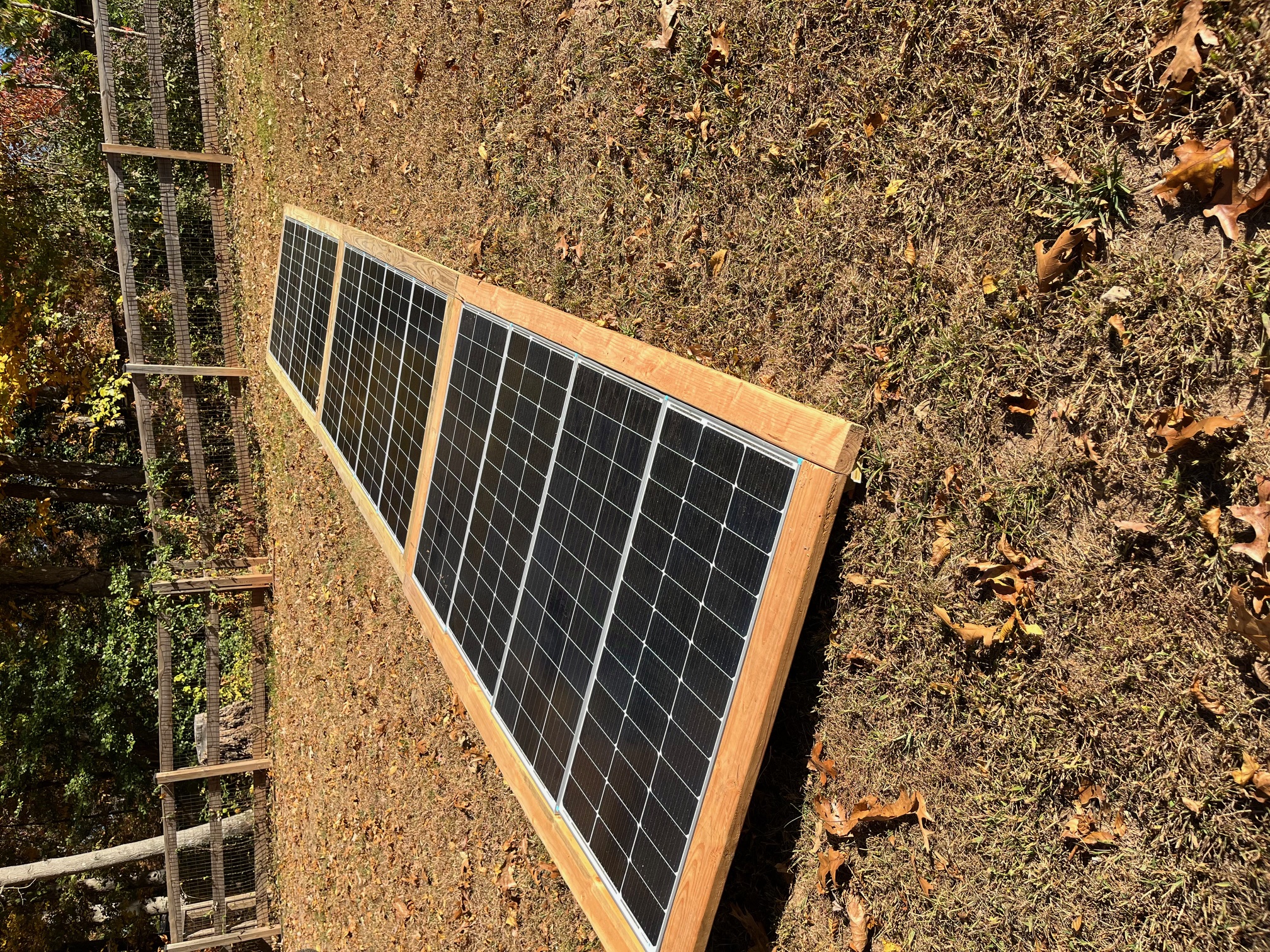 12 Renogy 100W Solar Panels (4 more added later)
After years of relying on a noisy gas generator during frequent
power outages, we finally made the switch to a quiet, sustainable
alternative. This project details my work installing a
comprehensive solar system with battery backup, capable of
powering critical circuits in our home. The setup efficiently
harnesses renewable energy and provides reliable backup power
without the noise pollution and fuel costs of a traditional
generator.
System Components
-
Solar Panels:
16 × Renogy 100W (1600W total capacity)
-
Inverter:
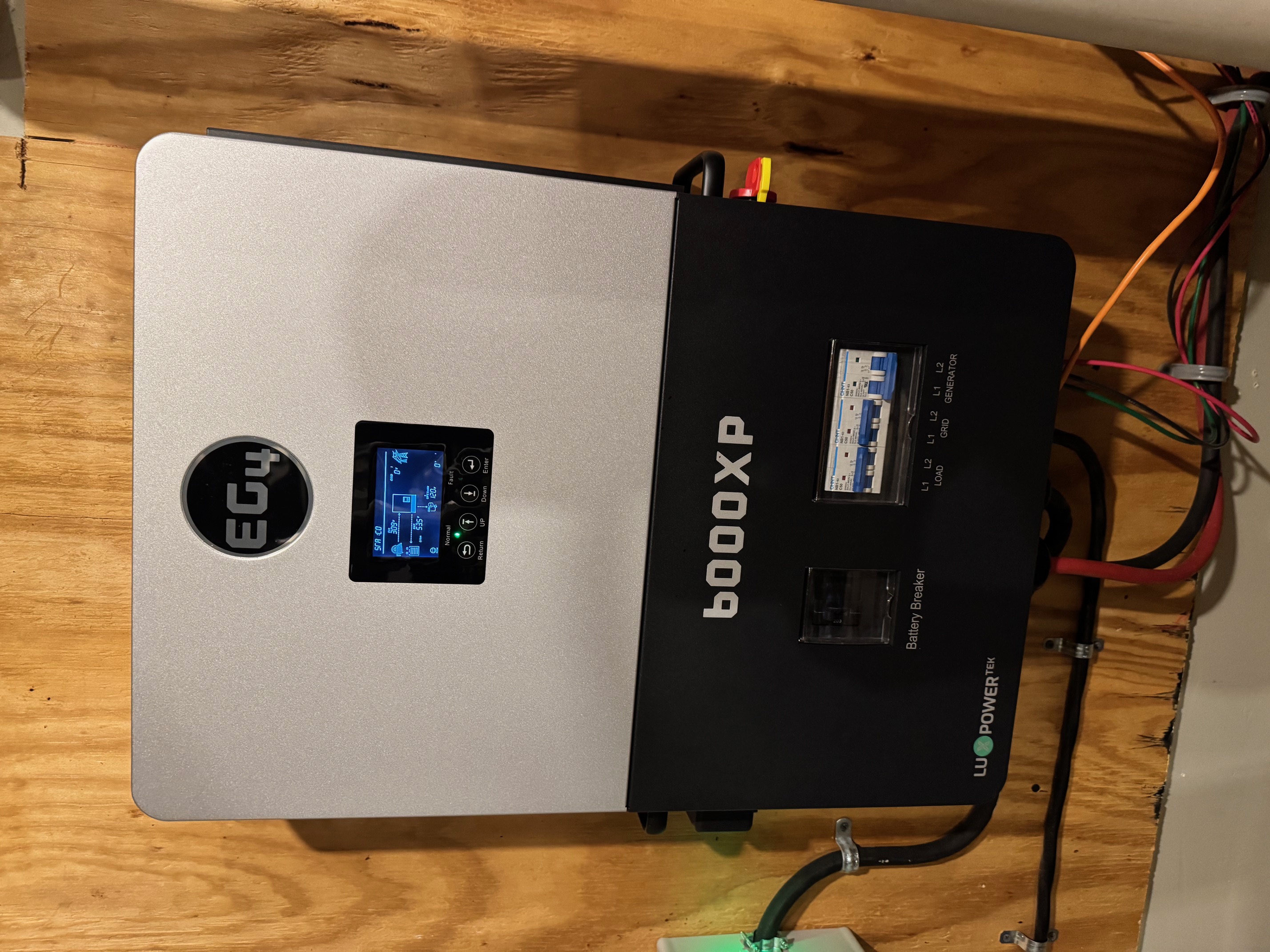
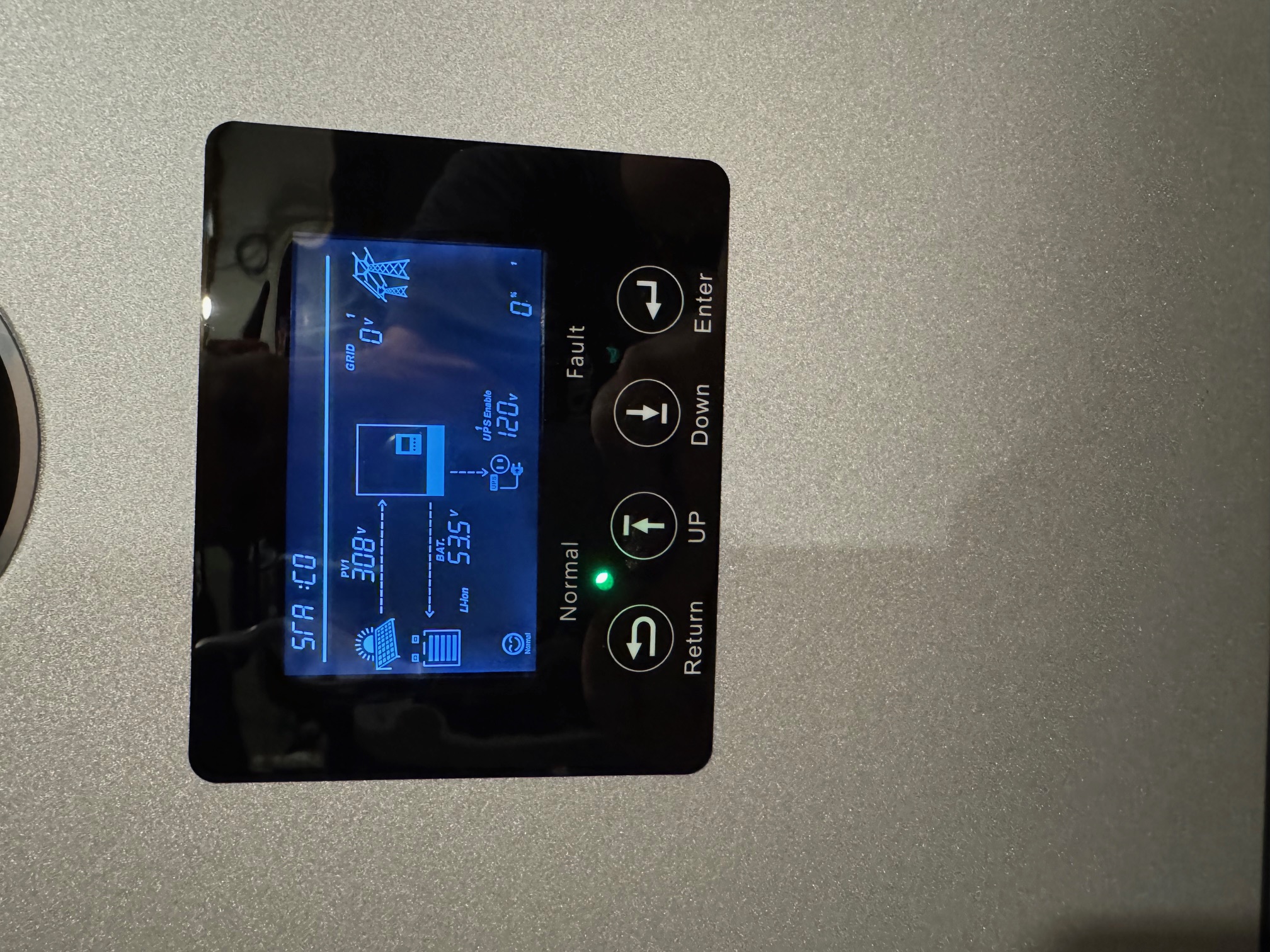
EG4 6000XP (6000W output)
-
Battery Storage:
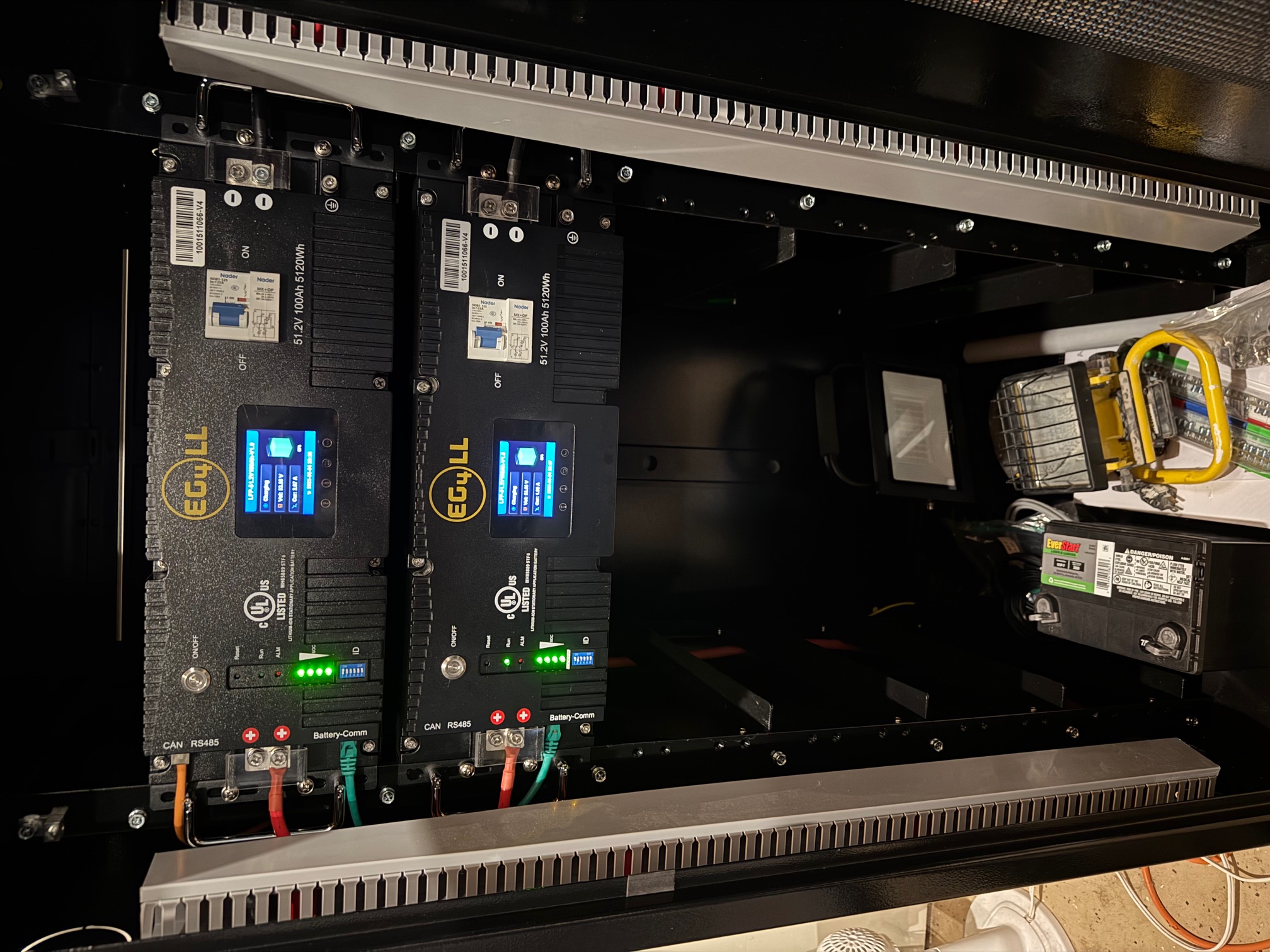
2 × EG4 5120 Watt-hour batteries (10.24kWh total)
-
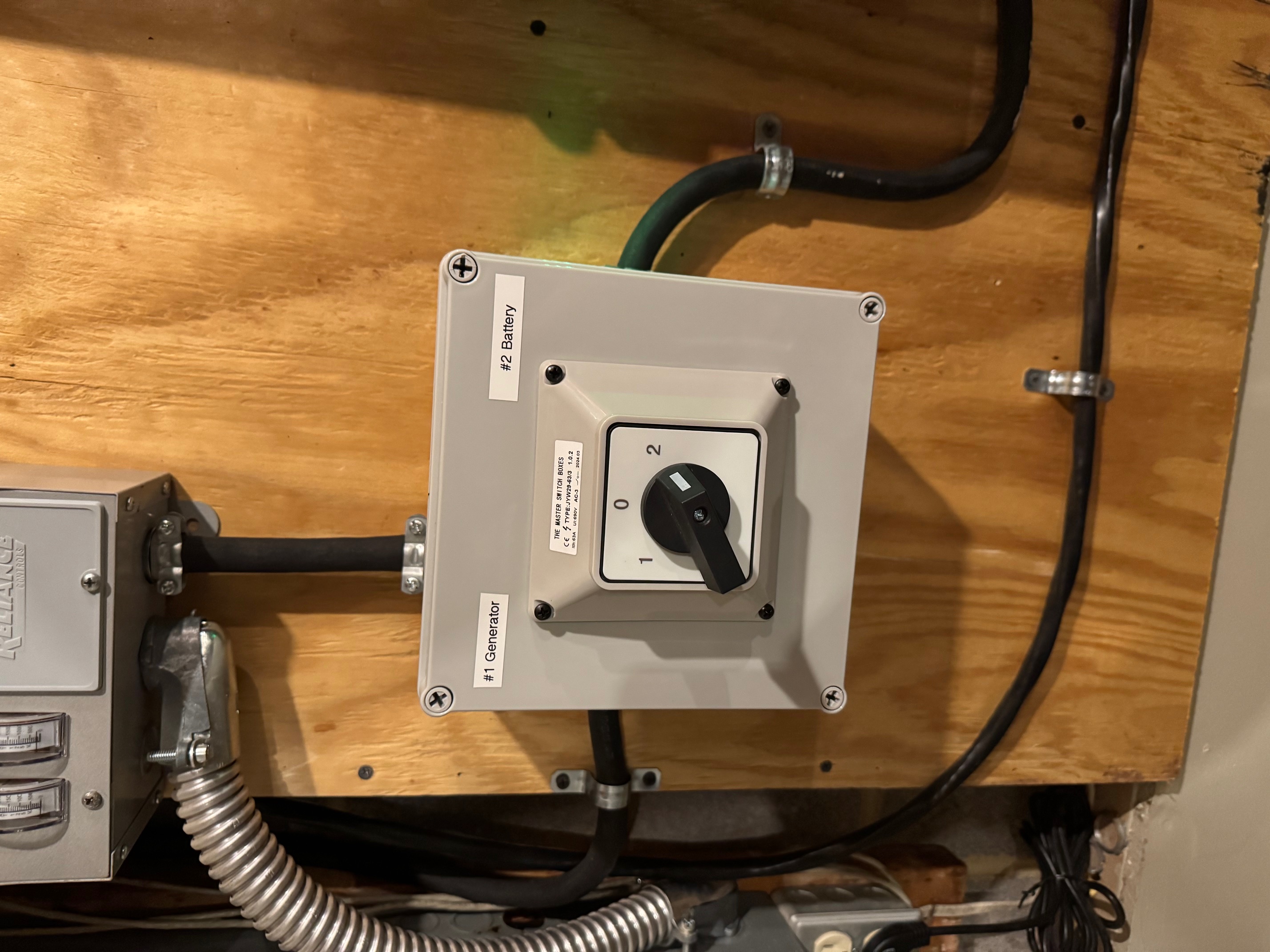
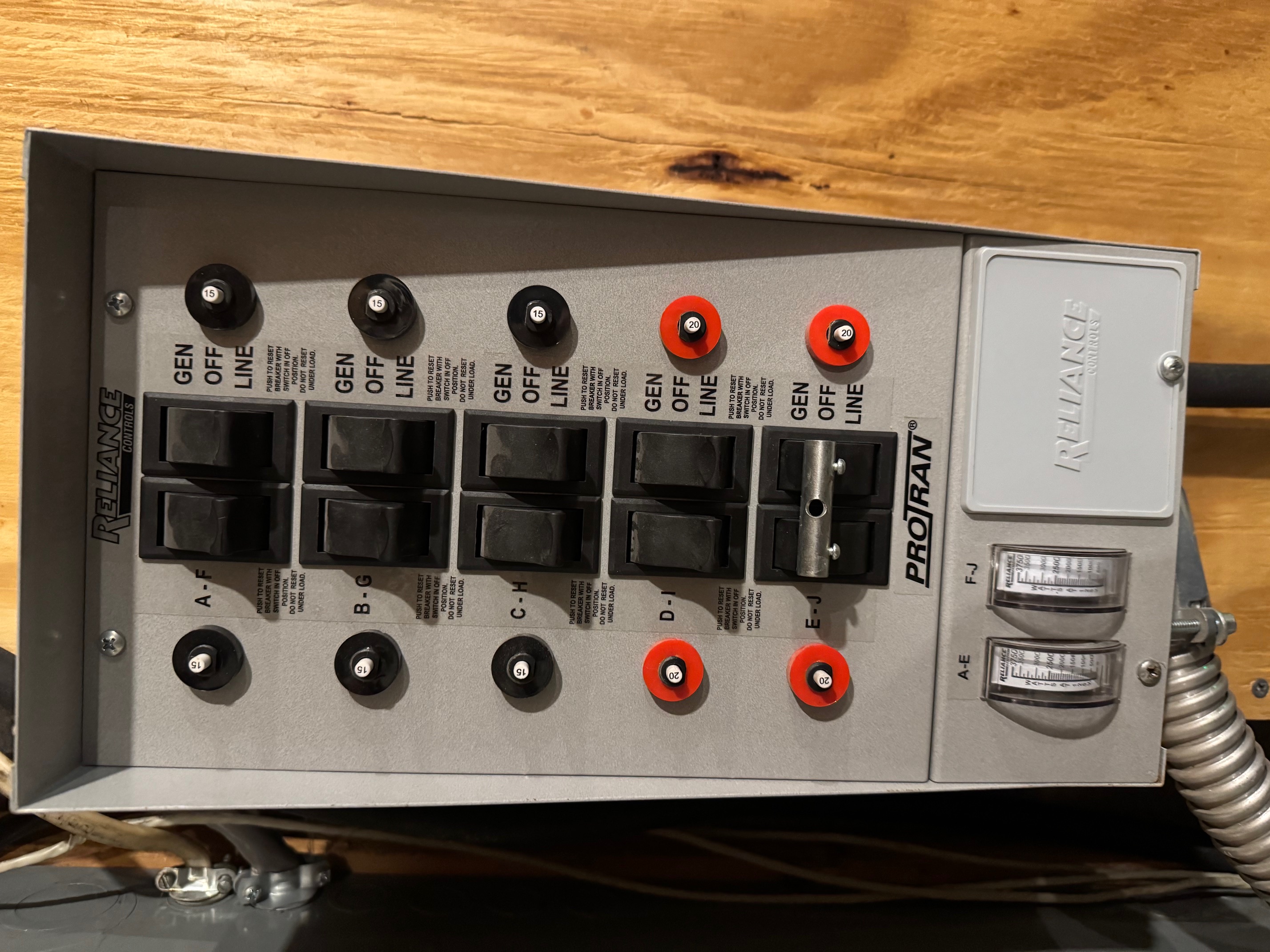
Transfer Switch:
50 Amp manual transfer switch
-
Integration:
Connected to home's essential circuits
Project Motivation
Living in an area prone to power outages (Northern VA), We have
relied on a gas generator as backup. However, several pain points
drove me to seek a better solution:
Solar Advantages
- Silent operation (no more generator noise)
- No fuel costs or maintenance
- Clean energy with zero emissions
- Automatic operation without manual intervention
-
Potential for energy independence - even with grid
power on, the batteries and solar are powering some
of the home's circuits, daily.
Gas Generator Drawbacks
- Loud noise disturbance for neighbors and family
- Continuous fuel costs and storage concerns
- Regular maintenance requirements
- Manual operation needed (starting, refueling)
- Carbon monoxide risk and emissions
System Performance
The solar system has been operational for seven months now, and
the results have been impressive. Here's a breakdown of its
performance:
-
Daily Generation:
Average of 5.0 kWh per day. Panels need to be moved to get out
of tree shadows earlier in the day and this will improve.
-
Self-Consumption:
System powers essential circuits including refrigeration,
internet, well pump, and lighting
-
Outage Performance:
During a recent 4-hour power outage, the system maintained
power to all critical circuits without requiring generator
backup
-
Transition Time:
The 50 amp switch transfers from grid to battery power easily
but manually.
-
Noise Reduction:
Complete elimination of generator noise, which previously
measured: LOUD
 Power generation and consumption over a typical week
System Integration
One of the most challenging aspects of this project was
integrating the solar system with the existing electrical
infrastructure. The 50 amp transfer switch serves as the heart of
this integration, providing seamless transitions between power
sources:
Power Source Priority Logic
-
Grid Power:
Primary power source
-
Solar + Battery:
Powers the home when grid is down. Some lower draw circuits
running 24/7 on battery/solar to offset some of the grid
power and profide some ROI.
-
Generator:
Only activated when batteries are depleted.
The EG4 6000XP communicates with the battery management system to
optimize charging cycles and prevent excessive discharge. This
intelligent management extends battery life while ensuring maximum
power availability when needed.
Lessons Learned
This project taught me several valuable lessons that might help
others considering a similar installation:
-
Ground Mount vs Roof
Ground mount makes it very easy to clean the panels and adjust
the tilt as the seasons progress. Learn the proper wire sizes
needed for your distance between the panels and the inverter.
The solar panels averaged less than $100 but I purchased them
over time. When I started buying them, they were $100 ea.
Looking at Amazon, they are around $75 ea however, I am not
sure how long that will last in today's tariff environment.
-
Proper Sizing Matters:
Carefully calculate your power needs before purchasing
equipment. Include a buffer for unforeseen loads and system
inefficiencies. The 6000xp inverter (and many others) are able
to be daisy chained together for higher output.
-
Battery Capacity is Critical:
For reliable overnight operation, battery capacity should be
your primary concern. The 10kWh system provides almost
adequate buffer for our essential circuits however we will be
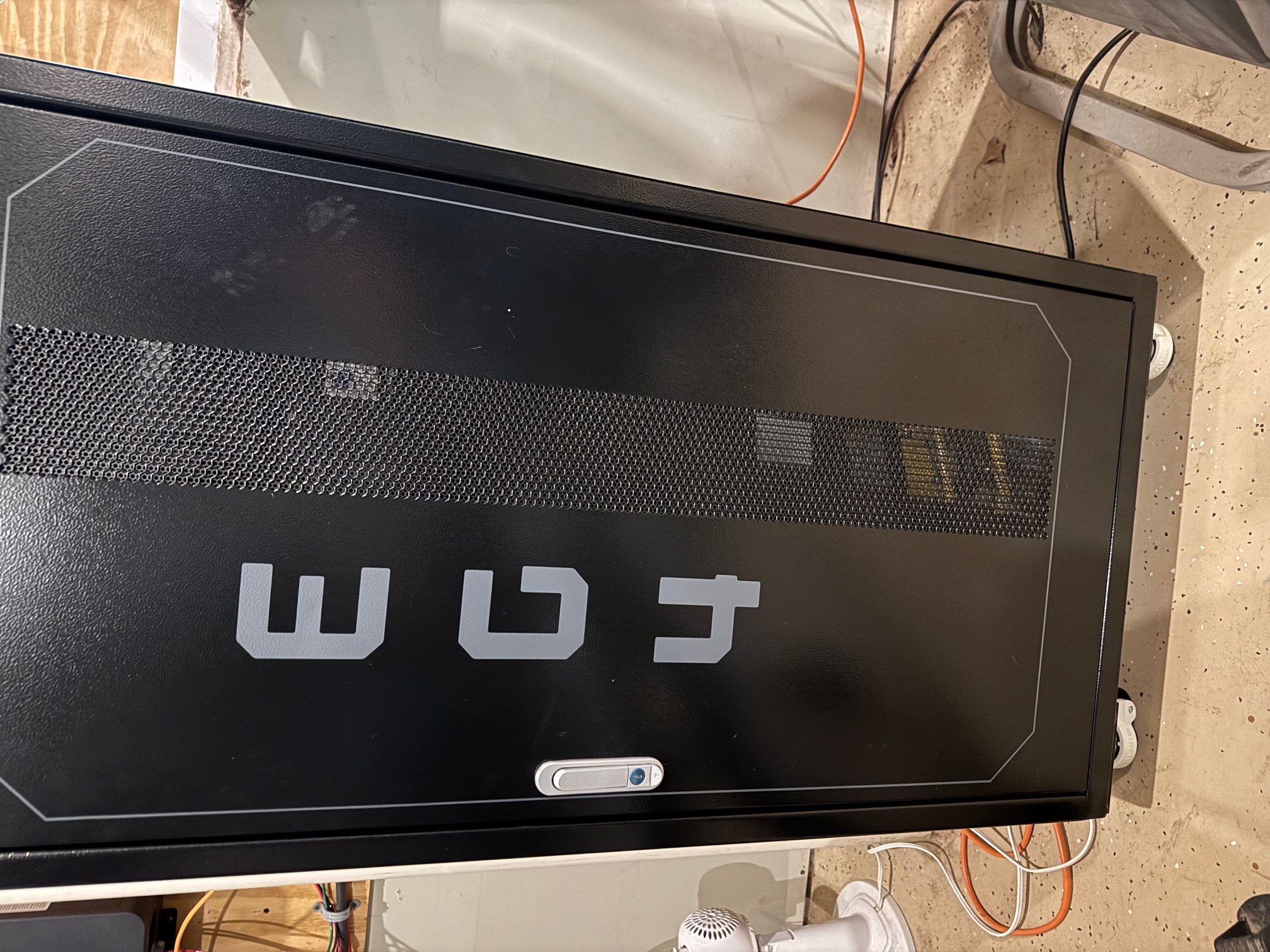
filling the cabinet with 4 more batteries for 30,720
watt/hours or 3 x more than we have now.
-
Integration Complexity:
Connecting a solar backup system to existing home circuits
requires careful planning and potentially professional help
for final connections however if you understand basic
electricity it was pretty easy. There is plenty of help
available at
diysolarforum.com
.
Also, follow and watch videos from
Will Prowse
who tests and breaks down most of the equipment on the market
today.
-
Weather Considerations:
System performance varies significantly based on weather
conditions. Plan for worst-case scenarios when sizing your
system. How long is your average power outtage and maybe add
some time to it. This is why we kept our gas generator, just
in case. We have several annoying stretches of 3 days or more
of complete cloud cover.
-
Monitoring is Essential:
The EG4's built-in remote monitoring proved invaluable for
optimizing performance and identifying potential issues early.
There is an app for the phone or you can login over the web.
There are many tools available if you google "solar panel tilt
angle" or similar, input your zip code and you will get
optimal panel tilt angles.
-
Have Help Available:
The batteries and the inverter are HEAVY. The delivery driver
had his little fork lift on the back of the truck and
everything was placed in the driveway. It was on me to get it
into the house. Luckily we had a hand cart.
-
Internet:
Consider FIOS if available for your internet. Over the years,
we have had service from Verizon and Comcast. Our home is rural
so our cell signal is terrible. One bar if that. During a
power outage, Comcast service will fail. Without knowing the
specifics of how each network is built, it appears that
comcast nodes are nearby and lose power along with the
neighborhood. Every time we have lost power, FIOS service
remains active the entire time as long as you are able to
power the box at your end (in the house).
-
Its ok to start small
My goal was to get a minimum viable product up and running.
After 7 months of "field testing" the next step is to add
another string of 16 panels (32 total) and fill out the cabinet
with 4 more batteries. Further future enhancement may be to
chain together multiple inverts are these are made for. The
reason for 16 panels is they are wired in series so the
voltage from each panel is added together. The 6000xp inverter
is capable of 480 volts dc input. The panels I have used have
a max voltage of 24 volts each so 16 could potentially produce
a max voltage of 384v. I have some room here however we see 4
seasons here in the mid atlantic. When solar panels are
exposed to cooler weather, their output can increase. Rather
than risk any damage to the inverter, I will do one of two
things: 1. wire in PARALLEL another 16 panels. This will keep
the voltage max nominal at 384v but increase from 1600 watts
to 3200 watts. 2. The 6000XP has two solar inputs so I may run
another set of wires through the conduit and connect the
additional string of panels this way. This will allow for more
future addition of panels. Each input is capable of 4000 watts
solar input.
-
Extra Power
Part of the learning curve was figuring out daily usage, daily
charging, etc. Calculations on paper are fine but dont always
carry over to the real world as you expect. One "problem" is
too much power on clear days. Running a few lower draw
circuits 24/7, the batteries will run down to about 60%
overnight and then charge up full by noon. Meanwhile there is
still 4 hours or so of the sun's energy not being used or
stored. A couple of ways to deal with this is to turn on
additional circuits to run 24/7 from the solar/batteries. A
more flexible solution would be to add on a hot water tank
that can help to store this additional energy. We could also
add a mini split heating/cooling system to run after the
batteries are topped off to take some of the load off of the
main house heat pump.
Conclusion
The transition from a noisy gas generator to a silent solar +
battery solution has been transformative. Beyond the environmental
benefits, the system provides greater peace of mind during outages
with its automatic operation and silent performance. The
elimination of fuel costs and maintenance requirements will
eventually offset the initial investment, making this a
financially sound decision in the long run.
For anyone considering a similar project, I highly recommend
taking the time to properly size your system based on your specific
needs. Watch the videos, read the forums (links above), and ask
questions. For starting out, the combination of the EG4 6000XP
inverter with dual 5120 Wh batteries has proven to be an excellent
choice for our requirements, providing reliable backup power
without the drawbacks of noisy and finicky gas powered generators.